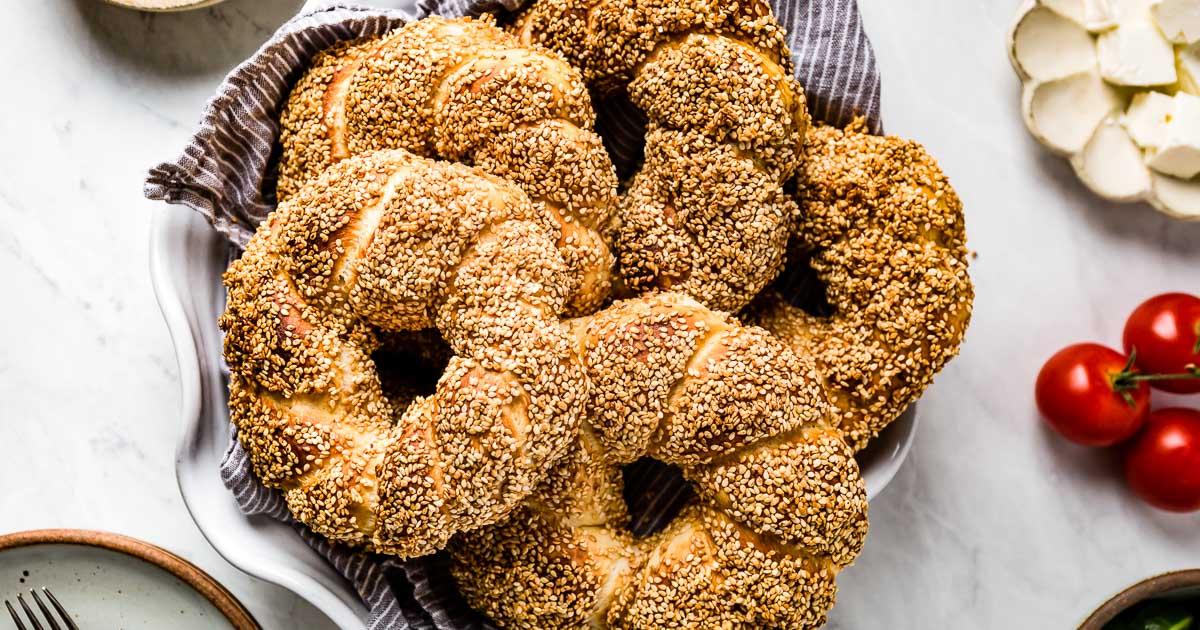
Bake Simit: Honey Sesame Turkish Bagels, Crunchy & Soft
There's a special joy in recreating global flavors in your own kitchen, and few culinary experiences are as rewarding as baking a batch of fresh Simit. Often described as the "Turkish bagel," Simit is so much more than just a bread roll; it's a cultural icon, a street food staple, and a delicious testament to centuries of tradition. With its distinctive crunchy exterior, surprisingly soft interior, and generous coating of toasted sesame seeds, Simit offers a unique texture and flavor profile that makes it utterly addictive. If you've ever dreamt of biting into a warm, freshly baked Simit, this comprehensive guide will show you precisely how to make Simit Turkish bagels right in your home kitchen.The Ancient Roots and Enduring Appeal of Simit
The story of Simit is as rich and flavorful as the bread itself. The word Simit derives from the Arabic "samīd," meaning "white bread" or "fine flour," highlighting its historical lineage. While you might know it as Simit in Turkey, it boasts various names across different regions, from "gevrek" in İzmir (meaning "crunchy") and parts of the Balkans and Greece, to "ѓеврек" in Macedonia and "геврек" in Bulgaria. Its popularity stretches far beyond Turkey, finding its home in Greece, Serbia, throughout the Balkans, the Middle East, Egypt, and Lebanon. Simit's presence in Istanbul dates back at least to 1525, according to historical records. The famed Ottoman traveler Evliya Çelebi noted 70 bakeries dedicated to making Simit in Istanbul during the 1630s. Later, in the early 19th century, Jean Brindesi's oil paintings beautifully captured daily life in Istanbul, prominently featuring Simit merchants hawking their wares on the bustling streets. Even Warwick Goble illustrated these iconic vendors in 1906, solidifying Simit's visual and cultural significance throughout history. It didn't take long for this humble bread to become a beloved staple across the vast Ottoman Empire, deeply embedding itself in daily life. To delve deeper into its fascinating past, explore Simit's Ancient Roots: The History of Turkey's Iconic Bagel. Today, Simit continues to be an integral part of Turkish culture, especially for the lower and middle classes. You'll find it sold everywhere, from dedicated bakeries to ubiquitous street carts piled high with fresh bagels. Vendors often announce their Simit's condition with enthusiastic calls: "Taze simit!" or "Taze gevrek!" for freshly baked, "Sıcak, sıcak!" for hot, and even "Yakıyor!" if it's too hot to handle. It's commonly enjoyed alone or paired with a steaming glass of Turkish tea, an assortment of cheeses, olives, fresh tomatoes, cucumbers, or even fruit jams and honey. In other parts of the Middle East, it’s a popular breakfast accompaniment to boiled eggs.Unlocking the Secret to Perfect Simit: Ingredients & Substitutions
The beauty of Simit lies in its simplicity. The core ingredients are surprisingly basic, yet their careful combination and the distinctive molasses dip create an extraordinary result.For the Dough:
- All-Purpose Flour: 400g (about 3 cups). While AP flour works perfectly, some bakers experiment with bread flour for a chewier texture.
- Warm Water: 235g (about 1 cup). The warmth helps activate the yeast.
- Active Dry or Instant Yeast: 1.8g (about ½ teaspoon) active dry yeast mixed with 5g water, OR 2 tsp instant yeast added directly to the flour. Instant yeast is generally easier for beginners as it doesn't require prior proofing.
- Olive Oil: 2 Tbsp. Adds richness and contributes to the soft interior texture.
- Fine Sea Salt: 7.2g (about 1 ¼ teaspoon). Essential for flavor balance.
For the Molasses/Honey Sesame Dip:
This is the magical step that gives Simit its signature glossy, crunchy crust and deep color.
- Pekmez or Molasses Syrup: Traditionally, Simit is dipped in pekmez, a dense grape, fig, or mulberry molasses. If you can find pekmez, it's highly recommended for an authentic flavor. A great alternative is a homemade molasses syrup: combine 115g (about ½ cup) dark muscovado sugar with 90g (about ⅓ cup) water. Bring to a gentle simmer until the sugar dissolves and the syrup thickens slightly. This provides a wonderfully deep, caramelized flavor.
- Honey Syrup (Alternative): Some recipes, like the one we'll adapt, use a honey-based dip for a slightly different, often sweeter, flavor profile. For this, combine ½ cup warm water with ¼ cup honey. While less traditional, it still provides the necessary sticky coating for the sesame seeds and a pleasant sweetness.
- Sesame Seeds: 1 to 1 ½ cups. Use a generous amount! The sesame coating is a hallmark of Simit. Toasting them lightly before coating can enhance their nutty flavor.
- Optional: Egg Wash: While not strictly traditional for the dip, some recipes suggest brushing the dough with a beaten egg before the molasses dip for extra shine and color. However, the molasses/honey dip itself usually provides sufficient browning.
Step-by-Step Guide: How to Make Simit Turkish Bagels at Home
Making Simit might seem intimidating at first, but with a clear guide, it's a surprisingly accessible and enjoyable baking project. Here’s a detailed breakdown of how to make Simit Turkish bagels that are both crunchy and soft. For a quick reference, you can also check out Easy Homemade Simit: Your Guide to Delicious Turkish Bagels.1. Prepare the Dough
- In a large bowl or the bowl of a stand mixer fitted with a dough hook, combine the flour and salt. If using instant yeast, add it directly to the flour. If using active dry yeast, proof it first by dissolving it in the 5g of warm water for 5-10 minutes until foamy, then add it to the flour.
- Add the main portion of warm water and olive oil to the flour mixture.
- Mix on low speed (or by hand) until a shaggy dough forms. Increase speed to medium-low and knead for 8-10 minutes until the dough is smooth, elastic, and no longer sticky. If kneading by hand, turn the dough out onto a lightly floured surface and knead vigorously. The dough should pass the "windowpane test" – a small piece stretched thinly without tearing.
2. First Rise (Bulk Fermentation)
- Lightly oil a clean bowl. Transfer the kneaded dough to the bowl, turning it once to coat.
- Cover the bowl with a damp kitchen towel or plastic wrap.
- Place it in a warm environment (like a turned-off oven with the light on) to rise until doubled in size, which typically takes 1-2 hours depending on the ambient temperature.
3. Prepare the Dip and Sesame Seeds
- While the dough rises, prepare your molasses/honey dip. If using muscovado sugar, gently heat it with water until dissolved and slightly thickened. Let it cool slightly. If using honey, simply mix it with warm water.
- Pour the dip into a shallow dish wide enough to accommodate the Simit rings.
- Spread your sesame seeds generously on another shallow plate or baking tray. If desired, lightly toast the sesame seeds in a dry pan over medium heat for 3-5 minutes until fragrant and lightly golden, then let them cool before use.
4. Shape the Simit
- Once the dough has doubled, gently punch it down to release the air.
- Turn the dough out onto a lightly floured surface and divide it into 6-16 equal pieces, depending on your desired Simit size. For smaller, crunchier Ankara-style Simit, aim for more pieces.
- Take one piece of dough and roll it out into a long rope, about 18-24 inches (45-60 cm) long. The key to the authentic Simit shape is often creating two thinner ropes from each piece of dough and then twisting or braiding them together. For a simpler approach, you can just use one rope.
- Form the rope (or twisted ropes) into a circle, pressing the ends firmly together to seal. You should have a ring with a hole in the middle.
5. Dip and Coat
- Carefully dip each Simit ring into the molasses/honey syrup, ensuring it's fully coated.
- Immediately transfer the wet Simit to the plate of sesame seeds, pressing gently to coat both sides generously. Don't be shy with the sesame!
6. Second Rise & Preheat Oven
- Place the coated Simit on baking sheets lined with parchment paper. Cover loosely with plastic wrap or a kitchen towel. Let them rest for 15-20 minutes while you preheat your oven.
- Preheat your oven to 200°C (400°F).
7. Bake to Perfection
- Bake the Simit for 15-20 minutes, or until deeply golden brown and crunchy. The molasses dip will caramelize, giving them their characteristic dark, shiny crust.
- Once baked, transfer the Simit to a wire rack to cool slightly.
Serving Suggestions & Simit Variations
The moment your Simit emerge from the oven, fragrant and glistening, you'll understand why they are so beloved. While best enjoyed warm, straight from the oven ("Sıcak, sıcak!"), they remain delicious for a day or two. Simit's versatility makes it perfect for any time of day. For breakfast, serve it with:- A strong glass of Turkish tea
- A selection of white cheeses (like feta or labneh)
- Black olives and fresh tomato slices
- Cucumber slices and fresh herbs
- Butter and a dollop of fruit jam or honey
- A savory spread like Muhammara (roasted red pepper dip)
- Boiled eggs, a common pairing in the Middle East
